Soft Roof Washing vs Pressure Washing - Detailed Comparison
Soft Roof Washing vs Pressure Washing: Which is Better for Your Home?
When homeowners notice black streaks, moss, or algae forming on their roof, the first reaction is often to remove it as quickly as possible. This is where the debate around soft roof washing vs pressure washing begins. Both methods are designed to clean exterior surfaces, but when it comes to roofing materials, the wrong choice can lead to expensive damage. Understanding the difference between these two approaches is essential for protecting your home and extending the life of your roof.
For many years, pressure washing was the go-to solution for exterior cleaning. However, roofing manufacturers and industry experts now strongly favor a safer alternative that preserves shingle integrity while effectively removing contaminants.
What is Pressure Washing?
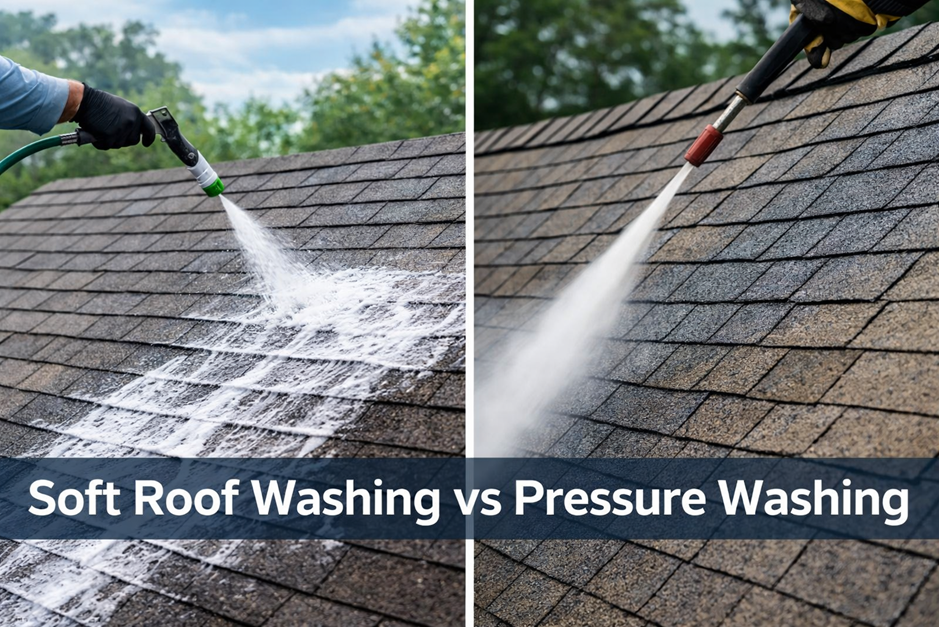
Pressure washing uses high powered water streams that can exceed 3000 PSI to blast away dirt, grime, and buildup. It works extremely well on durable, non-porous surfaces such as concrete driveways, sidewalks, and brick.
However, pressure washing roof shingles presents serious risks. Asphalt shingles are layered with protective granules that shield the roof from UV rays and weather exposure. High pressure water can strip these granules away, accelerating roof deterioration and potentially voiding manufacturer warranties.
Additionally, forceful water can be driven underneath shingles, which may lead to trapped moisture, wood rot, and leaks over time.
What is Soft Roof Washing?
Soft washing is a specialized soft wash roof cleaning method that uses low pressure water combined with biodegradable cleaning solutions. Instead of relying on force, this safe roof cleaning method targets and kills algae, mold, mildew, and bacteria at the root.
A proper soft wash typically uses water pressure comparable to a garden hose, making it a true low pressure roof cleaning approach. The cleaning solution does the heavy lifting by breaking down organic growth before the roof is gently rinsed.
Because it eliminates organisms at the source, results last significantly longer compared to surface level cleaning.
Soft Roof Washing vs Pressure Washing: A Detailed Roof Cleaning Comparison
When evaluating both, the difference becomes clear once you examine cleaning effectiveness, safety, and long-term results.
1. Cleaning Effectiveness
Pressure washing focuses on removing visible stains by force. While it can make the roof appear cleaner temporarily, it does not eliminate the underlying organic growth. Algae and moss roots remain embedded, allowing regrowth within months.
Soft washing penetrates and neutralizes the organisms causing the stains. This creates a longer lasting clean and slows future growth.
2. Roof Safety
High pressure systems can cause irreversible damage to shingles, flashing, and sealants. Many roofing manufacturers explicitly warn against pressure washing roof shingles due to the risk of granule loss.
By contrast, the soft wash roof cleaning method protects delicate roofing materials. Since it relies on cleaning agents rather than water force, it maintains structural integrity and preserves warranty coverage.
3. Longevity of Results
Another major difference in this roof cleaning comparison is durability. Pressure washing often delivers short term results because it addresses only surface buildup.
A professional soft wash can keep a roof clean for several years because it eliminates algae at the root. This significantly reduces the frequency of future cleanings.
4. Environmental Considerations
While pressure washing uses only water, it can push debris and contaminants into landscaping and storm drains.
Soft washing companies use biodegradable solutions designed to be safe for surrounding plants and surfaces when applied correctly. This makes it a responsible and safe roof cleaning method for residential properties.
Why Roofing Experts Recommend Soft Washing
The Asphalt Roofing Manufacturers Association advises against aggressive cleaning techniques on asphalt shingles. Their recommendation supports low pressure roof cleaning practices that prevent premature aging.
Black streaks on roofs are commonly caused by algae known as Gloeocapsa magma. These organisms feed on limestone filler within shingles and thrive in humid climates. Simply blasting them away does not solve the root problem.
By targeting the biological source of staining, soft washing preserves both appearance and function. This is why experienced contractors consistently favor soft wash vs high pressure cleaning for residential roofing systems.
When is Pressure Washing Appropriate?
Pressure washing is not inherently bad. It remains highly effective for heavy duty surfaces such as driveways, patios, and concrete retaining walls. In those cases, force is necessary to remove embedded grime and oil stains.
However, roofing materials require a different level of care. Using excessive pressure on shingles can shorten the lifespan of your entire roofing system.
Final Thoughts:
When considering soft roof washing vs pressure washing, the safest and most effective option for most residential roofs is clear. Soft washing provides a deep clean without compromising the integrity of your shingles. It extends roof life, improves curb appeal, and prevents premature damage.
While pressure washing has its place on hard surfaces, it should not be the first choice for roofing materials. A professional low-pressure approach ensures long lasting results and protects your investment.
If you are evaluating soft roof washing vs pressure washing for your home in Greater Houston, remember that preserving your roof today can prevent costly repairs tomorrow. Choosing the right cleaning method makes all the difference in maintaining both beauty and durability.
FAQs:
Will soft roof washing remove black streaks permanently?
Soft washing removes the algae causing black streaks and significantly slows regrowth. While no method guarantees permanent results, professional treatment can keep your roof clean for several years.
Can soft washing improve my home’s curb appeal before selling?
Yes. A professionally cleaned roof can dramatically enhance curb appeal, making your home look newer and better maintained, which may positively influence buyers.
Does roof cleaning help with homeowners insurance inspections?
In many cases, yes. A clean, well-maintained roof may reduce concerns during inspections and demonstrate proactive property maintenance.
Can roof cleaning increase my roof’s lifespan?
Regular professional cleaning removes harmful organic growth that can weaken shingles over time, helping extend the overall lifespan of your roof.
Is roof cleaning necessary if I do not see visible stains?
Not always immediately, but early maintenance can prevent heavy buildup. In humid climates, algae can begin forming before visible staining appears.
Will soft washing protect my gutters and flashing?
Yes. Because it uses low pressure, soft washing minimizes the risk of loosening flashing, damaging gutters, or disturbing roof components.
How long does a professional roof cleaning service take?
Most residential roof cleanings take a few hours, depending on roof size, slope, and the level of buildup.